
Are Co-Ops The Key To A Sustainable Economy? Find Out Now
I have always been a fan of Co-ops. The idea of co-ops, or cooperatives, has been floating around for quite a while as a way to build fairer, more community-focused businesses. Lately, I’ve noticed more people asking if co-ops could actually shape a more sustainable economy. Co-ops pop up in everything from food and farming to banking, housing, and renewable energy projects. But are they really the secret sauce for keeping communities resilient and economies steady for the long haul? Here’s a run-through of how co-ops work and why they might matter for the future.
How Do Co-Ops Actually Work?
Co-ops aren’t your typical businesses. The big difference is their ownership and control structure; members, not outside investors, own the place and help steer the ship. Decisions usually get made on a one-member, one-vote basis, so everyone gets a say in big moves and future plans.
Profits, when there are any, don’t just end up in a few shareholders’ hands. They’re distributed among members or poured back into the business, community projects, or sustainability efforts. This model helps co-ops feel more like a team effort than a top-down organization that puts profit above all else. Co-op types include worker co-ops (owned and run by employees), consumer co-ops (owned by shoppers), producer co-ops (run by groups such as farmers), and housing co-ops, which manage property or apartment buildings for residents. Beyond these, there are also multi-use cooperatives that serve different functions depending on community needs, blending aspects of worker, consumer, or producer models under one roof.
Why Co-Ops Appeal to Folks Looking for a Sustainable Economy
One thing that draws many people to co-ops is their focus on people and place over profit. Co-ops usually aim to meet real local needs, minimize environmental harm, support fair wages, and build stronger social connections. When members live in the community, they’re often more careful about making decisions that affect everyone. Plus, profits can go right back into projects that promote green practices, create better jobs, or build community spaces.
A grown-up example is renewable energy co-ops, where people pool resources to build solar or wind projects that benefit the community, instead of lining the pockets of faraway energy companies. Or take a look at food co-ops partnering with local farmers and reducing packaging waste, making shopping a little more planet-friendly. These little moves add up over time.
Additionally, co-ops often adopt ethical sourcing, community well-being, and responsible resource use as nonnegotiable values. These core beliefs steer both everyday operations and long-term strategies. As more consumers pay attention to where their money goes, co-ops show that business can be a force for good when it stays accountable to its members and its neighborhood.
The Role of Co-Ops in Building Economic Resilience
Local economies can be fragile, especially when big companies pull out or switch up priorities overseas. Co-ops stick around because their members have a personal stake in the place; jobs and services aren’t likely to get outsourced or blocked by a board in another country. Co-ops tend to recycle more money within a community, keeping things humming, supporting local businesses, and protecting jobs even during downturns.
When you look at the bigger picture, a co-op network in farming, food retail, housing, and finance can help folks weather tough times. A worker co-op can let employees steer the business through hard periods instead of just cutting back or closing shop. Credit unions and co-op banks focus on community lending rather than risky investment schemes that can tank the economy.
Community-driven institutions like co-ops also tend to respond faster and more effectively to local challenges, whether it’s providing emergency services during natural disasters or keeping food on the shelves during economic shocks. Because their priority is stability and local well-being, many co-ops act as anchors in turbulent times, offering a safety net and creating new jobs or services as needs change.
Getting Started with a Co-Op: Basics for Beginners
The co-op model can sound intimidating if you’ve only ever worked for or shopped at traditional businesses. If you’re thinking about joining or forming a co-op, getting the basics sorted early on is super important. Here are some terms you’ll hear in the co-op world:
- Member Equity: Members pay a (usually small) fee or buy a share to join, which helps fund the co-op.
- Patronage Dividend: Profits are often shared with members based on their use or contributions to the co-op.
- Democratic Governance: Big decisions get made through open voting, not just by a few top dogs.
Choosing the right legal and financial structure may also depend on your region’s laws or available support. Many local development agencies, nonprofit groups, and even national co-op associations offer guidance and technical support to help new co-ops avoid common pitfalls and get off to a strong start.
Quick Tips for Getting a Co-Op Off the Ground
Starting a co-op is pretty different from launching a regular business. Here are some practical steps:
- Gather a Committed Group: Bring together people with shared values and a clear goal.
- Decide the Co-Op Type: Pick a model, worker, consumer, producer, or housing that matches your needs.
- Create a Solid Business Plan: Put together financials, policies, and growth strategies that reflect the co-op’s values.
- Register and Set Up Structure: Obtain legal recognition, establish bylaws, and determine voting rules.
- Focus on Member Education: Ensure everyone understands how the co-op works, its goals, and their roles.
These first steps help create a strong foundation. A co-op with an engaged, informed membership and a clear plan is more likely to thrive long term. Regular meetings, open communication, and ongoing education further build the internal culture that supports steady growth. It’s also wise to seek mentorship or advice from an established co-op in your area if possible.
Things to Consider Before Joining or Starting a Co-Op
Co-ops bring plenty of positives, but they also have their own set of challenges. Here’s some stuff to think over:
- Getting Enough Funds: Co-ops can sometimes struggle to raise funds because they don’t attract outside investors as readily. Grants, community fundraising, and member buy-ins are common options.
- Balancing Decision-Making: It takes time to get everyone on the same page. Group decision-making is fairer, but it’s not always the fastest.
- Business Competition: Some co-ops compete with big chains or established businesses that use lower prices to squeeze out competition.
- Ongoing Member Engagement: Co-ops rely on active participation, so it’s crucial to keep members engaged and motivated.
It’s also worth remembering that while co-ops strive for equality, disagreements still happen. Building good conflict resolution practices and strong internal communication is crucial for keeping your co-op healthy as it grows.
Growing Sustainable Funding
Getting resources together is one of the trickier bits. Unlike traditional companies, co-ops can’t always turn to venture capital or big outside investment as easily. Many rely on grants, community-supported investments, or partnerships with local organizations for sustainable development. Some successful co-ops design membership drives that attract people who benefit directly from their services or share their mission; this fuels not only funding but also strong community roots.
Speed Versus Fairness in Decisions
Decision-making takes longer because everyone gets a voice. While this can slow things down, it usually means the results are more thoughtful and fair. Some co-ops use tools like consensus decision-making or delegate certain decisions to committees to keep things moving while still honoring everyone’s voice. Using technology, such as group chats or voting tools, can help streamline discussions and give everyone a chance to participate even when schedules clash.
Staying Competitive and Relevant
Big box stores and corporations are tough competition. Many co-ops stand out by offering better service, focusing on local products, or being more flexible in meeting members’ needs. Focusing on ethics, transparency, and local loyalty helps co-ops attract supporters even if prices aren’t always rock-bottom. Offering unique products, personalized service, and events that connect members can help set a co-op apart from the crowd.
Pro Tips to Make Co-Ops Even More Sustainable
Some co-ops really shine at sustainability. Here are a few practical ideas co-ops use to stay planet-friendly and people-centered:
Prioritize Local Connections: Sourcing goods or services locally reduces the carbon footprint and supports fellow small businesses.
Commit to Renewable Energy: Investing in solar panels or supporting clean power initiatives saves money and sets a positive example.
Transparent Communication: Keeping everything open builds trust and keeps everyone on board. Regular updates and feedback sessions go a long way.
Invest in Education: Training and development for members and staff strengthen the co-op and its mission. This keeps the team skilled and the vision clear.
It’s the combo of these ongoing efforts that helps co-ops stay strong, trusted, and green. People are more likely to stick around or join when a co-op walks the talk on sustainability and community impact. Extra steps, such as offering recycling programs, bulk-buying to minimize waste, or developing educational outreach for local schools, show a real commitment to both the environment and the wider community.
Where You’ll See Co-Ops Making a Big Splash
Many co-ops are already transforming entire sectors. Some examples you’ll spot out in the wild:
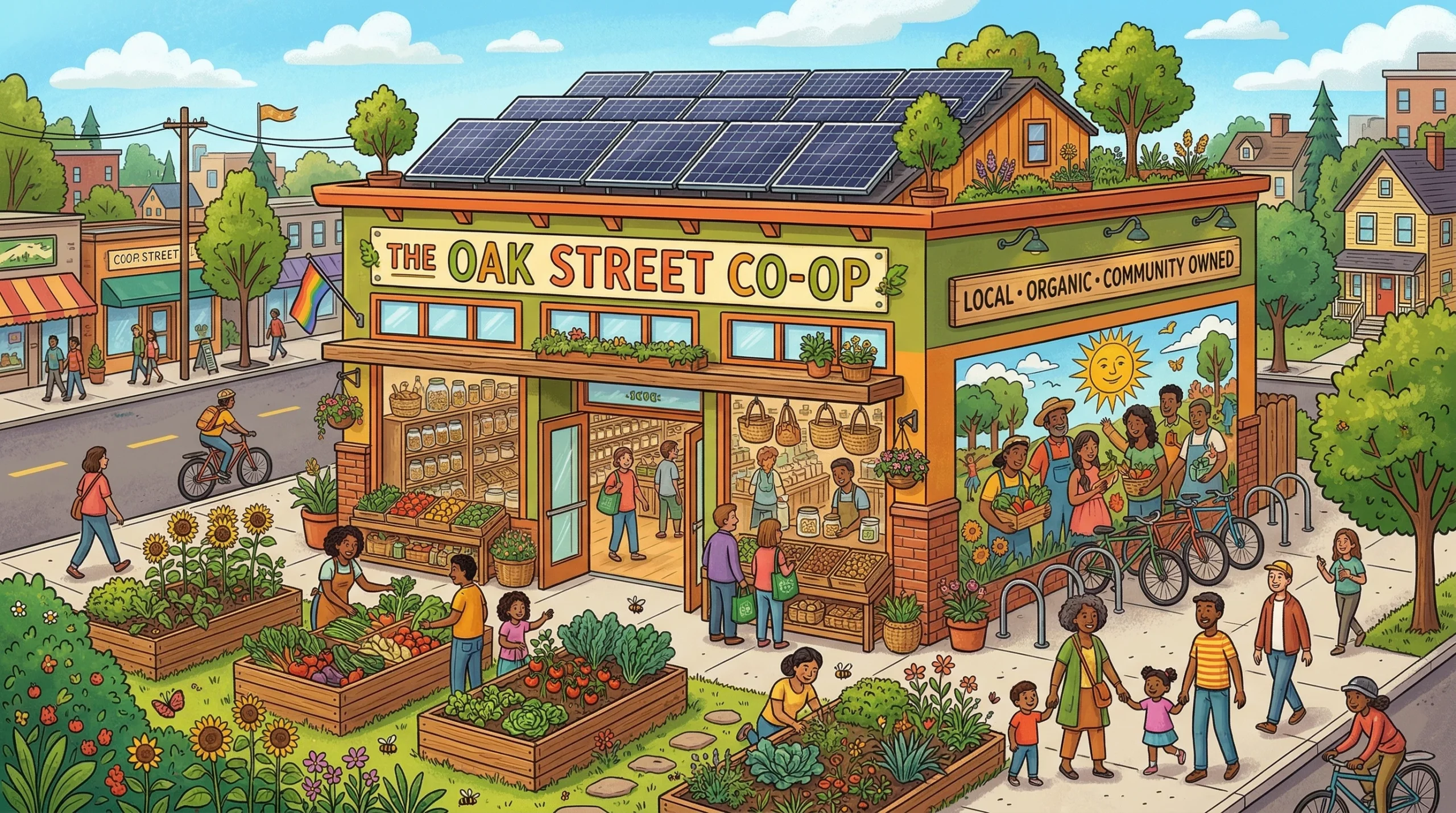
- Food Co-Ops: Grocery stores owned by members, focusing on organic, local produce, and low-waste practices.
- Credit Unions: Member-owned banks giving out fairer loans and investing directly back into the community.
- Worker Co-Ops: Businesses where employees run the show, from bakeries to tech support shops.
- Energy Co-Ops: Groups coming together to kickstart solar or wind projects that provide clean power for local homes.
Each type demonstrates that co-ops are flexible and can meet a wide range of needs, often offering a sweeter deal for people and the planet than traditional models can. There are also art and craft co-ops, childcare co-ops, and even transportation co-ops that fill in crucial gaps where standard businesses may fall short.
Final Thoughts
Co-ops offer a practical way to build businesses focused on people and the planet. With a model centered on fairness, local reinvestment, and group decision-making, they’re worth checking out for anyone looking to support or help create a more sustainable economy. The adventure can be slow, and there are real hurdles, but more and more communities are seeing the upsides, especially as the world looks for practical solutions to big problems. Looking ahead, as environmental awareness spreads and economic challenges grow, the co-op idea could turn out to be a key piece in the puzzle for a better, fairer economy where everyone has a seat at the table.
Frequently Asked Questions
What makes co-ops different from regular businesses?
Answer: Co-ops are owned by their members, who have equal say in decisions. Profits are shared with members or reinvested in the community, not just taken out by investors.
Are co-ops only for small or local businesses?
Answer: Not at all. Some co-ops have grown quite large, for example, national credit unions or massive agricultural co-ops. They just keep the same member-driven approach, no matter the size.
Can I join any co-op?
Answer: It depends on the type. Many co-ops are open to anyone willing to pitch in, but some have requirements based on location, profession, or other factors.
Are co-ops always environmentally friendly?
Answer: Many co-ops prioritize green practices, but it’s not guaranteed. Always check out a co-op’s mission to see where its focus is.